

Recently I stumbled around my backyard in the dark, cleaning up after a dinner party.
Luckily, the party was enough fun that it ran well into the night.
Unluckily, I don’t have lights back there.
It took a while, but I cleaned everything up. All without a single dropped plate or scraped knee.
Gingerly-placed steps and conscious balance kept me from falling—even without seeing where my feet were going.
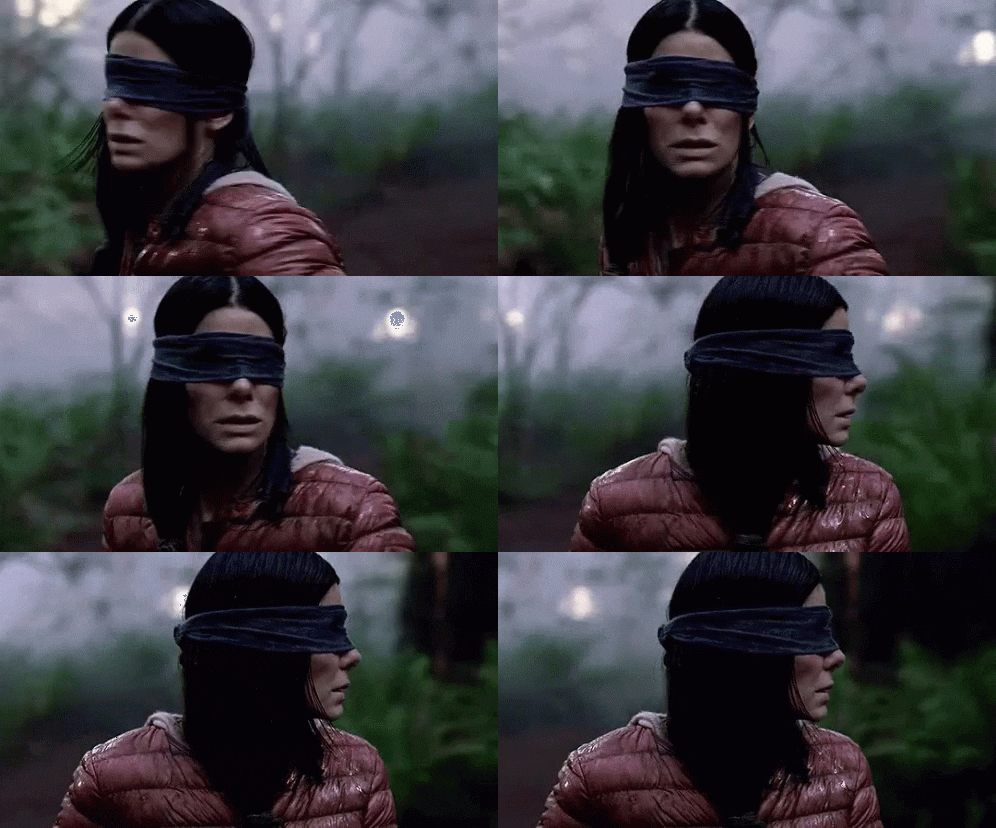
By moving with care in an unknown space, I was able to accomplish my goal without issue.
When Familiarity Becomes a Trap
Another time in the dark, I walked to my bed with the light off after moving some furniture the day before.
Taking full-length, full-speed strides, I confidently walked my toes directly into the bed frame.
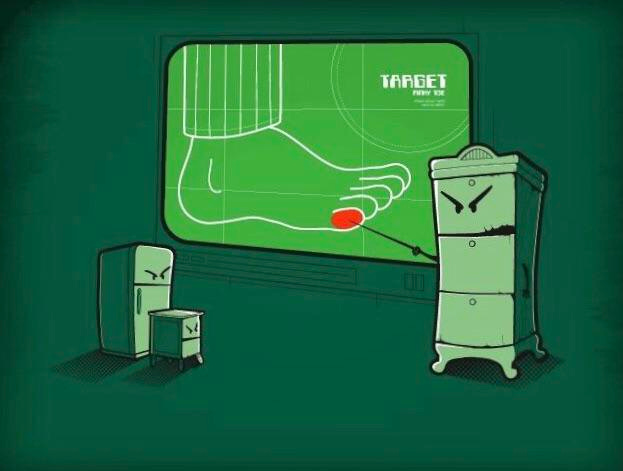
My mental model of the room was clear, but inaccurate.
Using a clear—but inaccurate—understanding of the room was worse than my no-knowledge exploration of the backyard.
Both moments taught me the same thing: fear and false confidence lead to worse decisions than uncertainty itself.
What This Has to Do With Marketing
Just like walking confidently into the bedframe, marketers often charge forward with measurements that feel familiar but don’t reflect reality.
Moni Oloyede (of the Marketing Accountability Council) does a great job of consistently calling out normal, but stupid marketing practices.1

In her most recent piece, she highlights a common, but flawed, metric that drives B2B marketing strategy (Marketing Qualified Leads [MQL]).
People cling to MQLs not because they work—but because they’re comforting.
Her most important quote is:
If Not the MQL, Then What Do We Do Instead?
Here’s the part marketers always ask me for: “Okay, but what’s the alternative?”
She goes on to give a few practical answers, but I want to highlight the state of someone asking that question.
They’re afraid.
Sometimes One Map Is Worse Than None
Someone asking that question is a lead hiker in a group. With only a map.
When you’re start out, you quickly realize the map is for a different trail, but the sun is sinking.
Quickly.
The light is fading and the group pesters you to get to a camp site.
The map says go left.
The trail splits straight and right.

If you’re clinging to the map as a clear source of truth, you’re about to go tramping into the untamed forest instead of slowing down.
The group wants to follow the tool, but you have the foresight to feel in your gut that its wrong.
You’ll be in a worse position if you confidently follow the map, then have to backtrack.
Do you let the group pressure you into stepping off the trail?
The False Choice We Keep Making
In business, there’s a natural conflict between two camps:
[Under measure] the measurements-don’t-matter camp
This group fears being overly constrained by bad metrics
[Over measure] the measure-uber-alles camp
This group fears the consequences of being wrong
Unfortunately, neither are fully right.
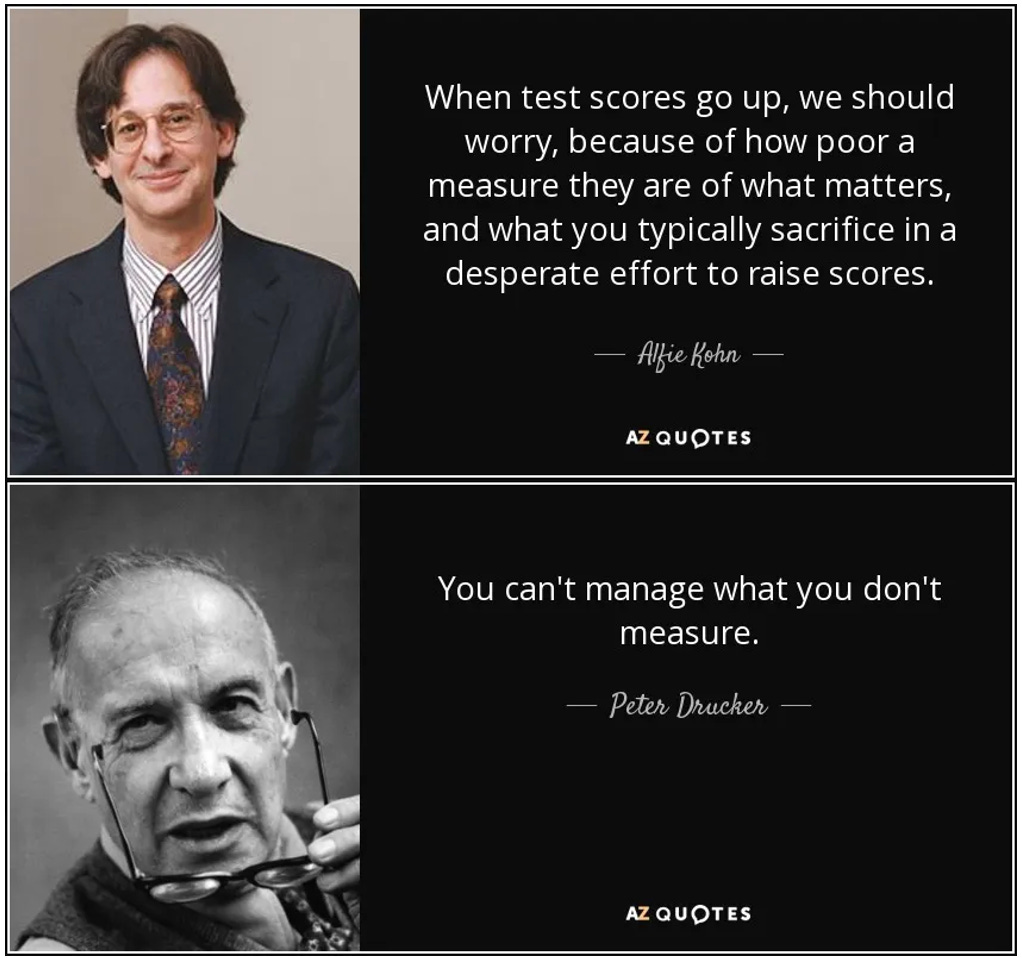
On one hand, ignoring trends and data when you have them is a foolish mistake.
On the other, blindly following measurements into a death spiral is even worse.
Instead of going all in on one camp, you should use your measurement to extract as much value as possible—but no more than that.
Why Data Alone Is Useless: How to Create Insights Instead of Trash

You’re always collecting data.
Even if you don’t mean to, your brain is always on the lookout for things to notice.
But the process of turning ‘things you notice’ into ‘insights’ in daily life is so intuitive that we don’t generally consider how complex it is.
Don’t let the fear of uncertainty tempt you into charging more confidently than you’re able to.
What Should I Do Instead?
Move through your data the same way you’d move through an unfamiliar path at dusk—carefully, deliberately, and with an honest read of what you can and can’t see.
Track the source of every metric and your confidence in it. Label where each number could drift from reality. It’s useful to have this pre-recorded.
Connect your conclusions directly to those sources. Don’t let insights float disconnected from the data that they come from.
Add expiration dates. Decide ahead of time what conditions would invalidate your assumptions or require a new look.
Stay humble about your predictions, but be confident about your work. Executives appreciate grounded confidence more than bravado.

Conclusion
In the dark, confidence without clarity is a liability—but fear without perspective is just as dangerous.
Most bad decisions, in marketing or anywhere else, come from the same instinct that pushes you to trust the wrong map (or sprint into the bedframe): the urge to make the uncertainty go away as fast as possible.

Fear begs for certainty. It wants you to pick a direction—any direction—and move with conviction, even when your footing is questionable.
But you don’t have to be driven by that impulse. As long as you are always learning, you don’t need all the answers today.
Slow down. Feel the ground beneath you.
Let your measurements inform you without letting them rule you.
The goal isn’t to escape uncertainty; it’s to navigate it without letting fear shove you into decisions you’ll regret.